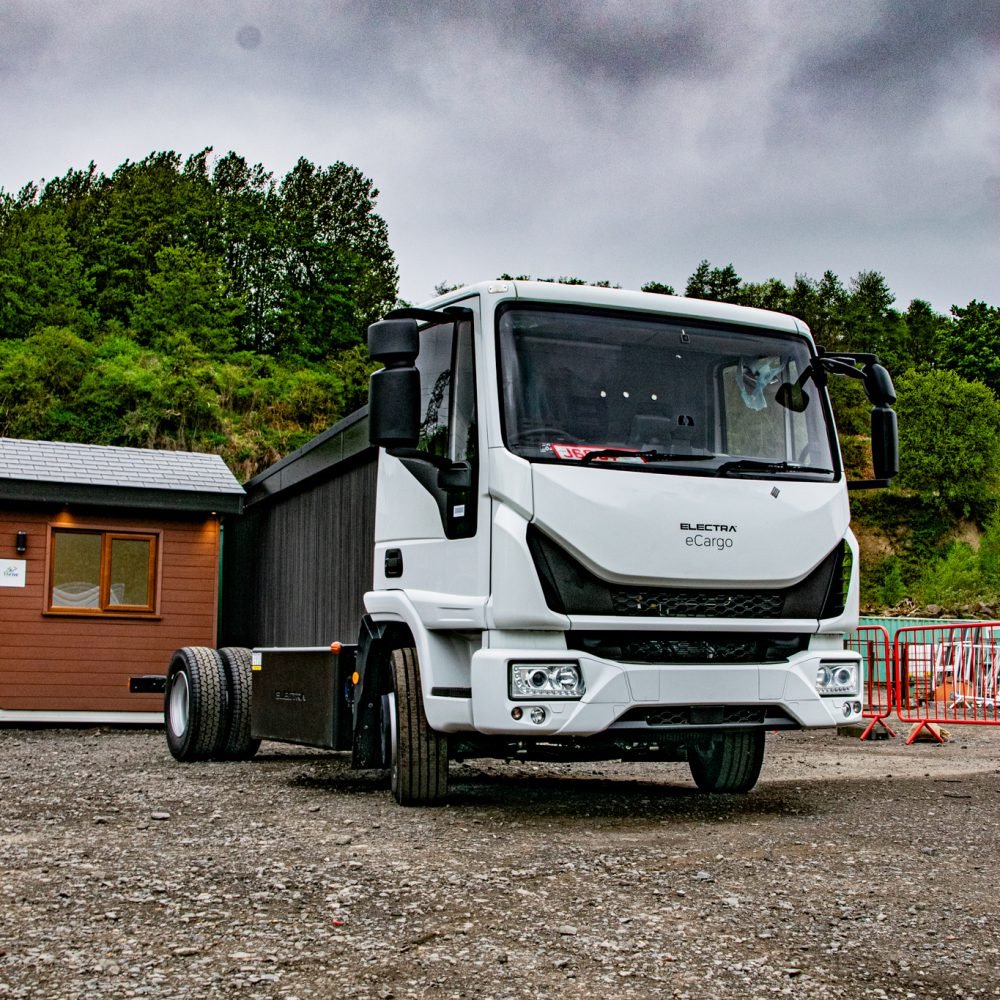
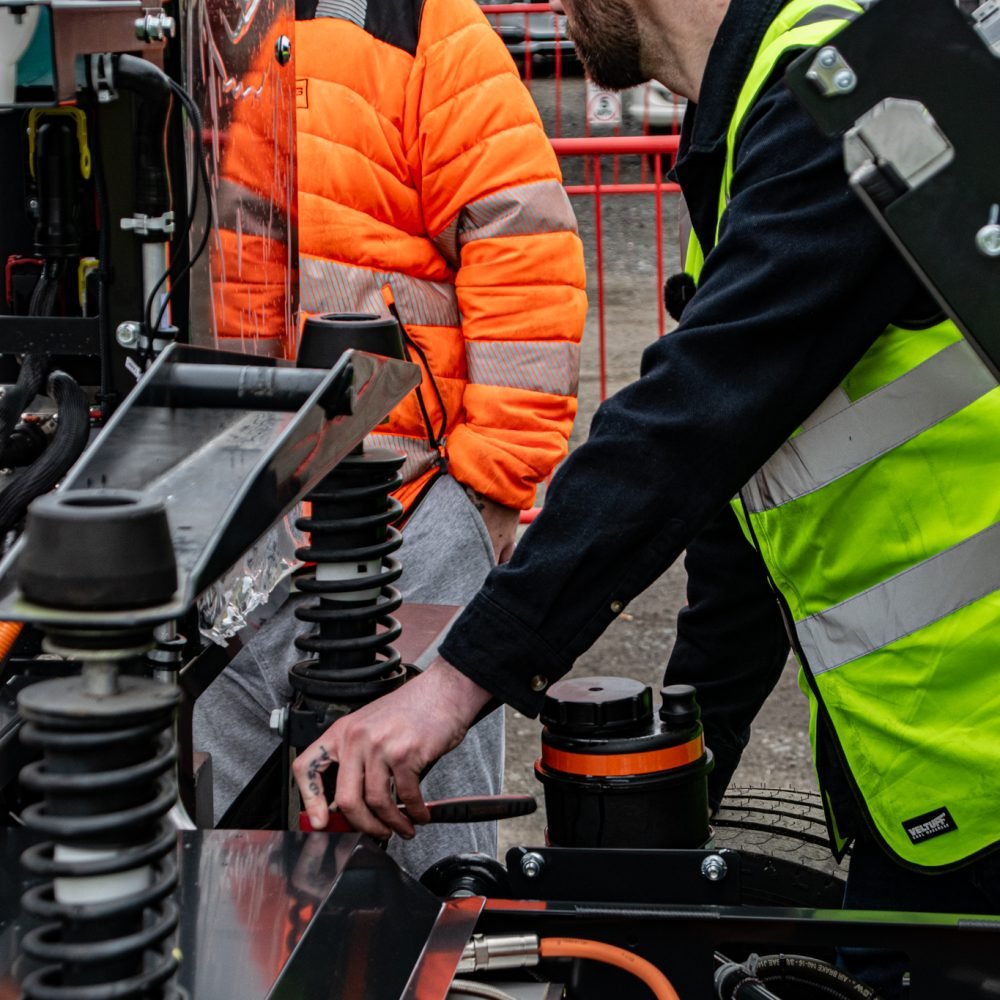
Electric trucks don’t need drivers taught how to drive again, they need drivers taught how to operate an electric truck safely, efficiently and confidently while maximising range, battery life and operational uptime.
6
Training Modules
8
Key Driving Differences
UK
Nationwide Delivery
CPC
Hours Available
Should drivers be trained differently?
An experienced HGV driver already possesses roadcraft, hazard perception, load security knowledge, vehicle dimensions awareness, and compliance and drivers’ hours knowledge.
That is why we deliver an eHGV conversion programme rather than a full driver retraining course, focused entirely on what actually changes when the drivetrain becomes electric.
Roadcraft
Hazard perception
Load security knowledge
Vehicle dimensions awareness
Compliance and drivers’ hours
Who we train
From an HGV trainer’s perspective, the programme length depends on where the driver is starting from.
Experienced HGV Driver
Conversion training plus supervised driving on the operator’s own vehicles.
Driver Trainer / Examiner
A longer programme including the full technical and safety content.
New-to-Industry Driver
eHGV content built into Category C / C+E training from the start.
Main driving differences
HGV vs EHGV
01 Torque and Acceleration
HGV
Power builds through the rev range.
Gear changes affect acceleration.
Drivers tend to anticipate torque delivery.
EHGV
Maximum torque is available almost instantly.
Faster, smoother acceleration from standstill.
Can catch inexperienced drivers out, especially when lightly loaded.
Training Implication: Drivers need to learn progressive throttle control and understand how the vehicle responds under different load conditions.
02 Regenerative Braking
HGV
Uses service brakes and engine braking/retarders.
Driving style often involves more coasting.
EHGV
Regenerative braking slows the vehicle while recovering energy.
Some systems allow “one-pedal driving” characteristics.
Vehicle behaviour changes significantly when lifting off the accelerator.
Training Implication:Probably the biggest driving difference. Drivers must learn how regeneration operates, when it is strongest, how to maximise energy recovery, and safe use on wet, icy and downhill roads.
03 Energy Management vs Fuel Management
HGV
Focus on fuel economy (MPG).
Refuelling takes minutes.
Route planning mainly considers legal and operational restrictions.
Training implication: Drivers need a much better understanding of range prediction, the impact of driving style on consumption, charge planning and energy-efficient driving techniques.
04 Vehicle Weight and Payload
HGV
Lower vehicle kerb weight.
EHGV
Batteries add significant weight.
UK and EU regulations provide additional weight allowances for zero-emission HGVs.
Weight distribution characteristics may differ.
Training Implication: Drivers should understand axle loading implications, payload limitations and how battery placement can affect handling.
05 Noise and Awareness
HGV
High engine noise provides feedback.
Other road users often hear the vehicle approaching.
EHGV
Extremely quiet at low speeds.
Reduced vibration and noise.
Training Implication: Drivers may need greater awareness around pedestrians, cyclists, yard operations and depot manoeuvring.
06 High-Voltage Systems
HGV
Standard vehicle electrical systems.
EHGV
High-voltage systems often operating at hundreds of volts.
Orange cabling and isolation systems.
Different emergency procedures.
Training Implication: Drivers require safety awareness training covering high-voltage hazards, accident procedures, vehicle isolation, emergency response protocols and what they can and cannot touch in the event of a fault.
07 Charging Operations
HGV
Refuelling is familiar and straightforward.
EHGV
Drivers may connect and disconnect high-power chargers.
Charging equipment varies by operator and site.
Charge planning becomes part of daily operations.
Training Implication:Drivers need practical training on charger operation, connection procedures, pre-use inspections, reporting defects and charge scheduling.
08 Driver Fatigue and Comfort
HGV
More vibration and noise.
Traditional drivetrain behaviour.
EHGV
Much quieter cab.
Less vibration and smoother operation.
Many operators report reduced driver fatigue, but the lack of engine feedback can initially feel unusual.
Training Implication: Drivers benefit from familiarisation exercises to build confidence with the different vehicle feel.
Ehgv training modules
Structure
Module 1
EHGV fundamentals
Vehicle structure and architecture
Battery systems
High-voltage awareness (what not to touch)
Emergency procedures
Module 2
Energy-Efficient Driving
Regenerative braking
Anticipation and momentum
Range optimisation
Route planning
Module 3
Charging Operations
Charger types
Connection procedures
Fault reporting
Charge planning
Module 4
Practical On-Road Assessment
Urban driving
Motorway driving
Hill routes
Regeneration management
Real-world energy monitoring
Module 5
Incident and Breakdown Procedures
Collision response
High-voltage isolation awareness
Fire and emergency protocols
Recovery arrangements
Module 6
Daily Vehicle Safety Checks
Fire extinguishers
Fluid levels
eHGV specific checks (cables, batteries, motors)
eHGV specific noise and visual indicators of system failure
Book eHGV training for your fleet
Our objective is simple… not teaching someone how to drive a truck again, but teaching them how to safely, efficiently and confidently operate an electric truck.